The Dynamic, Digital, AI supported, Balanced Scorecard (BSC)
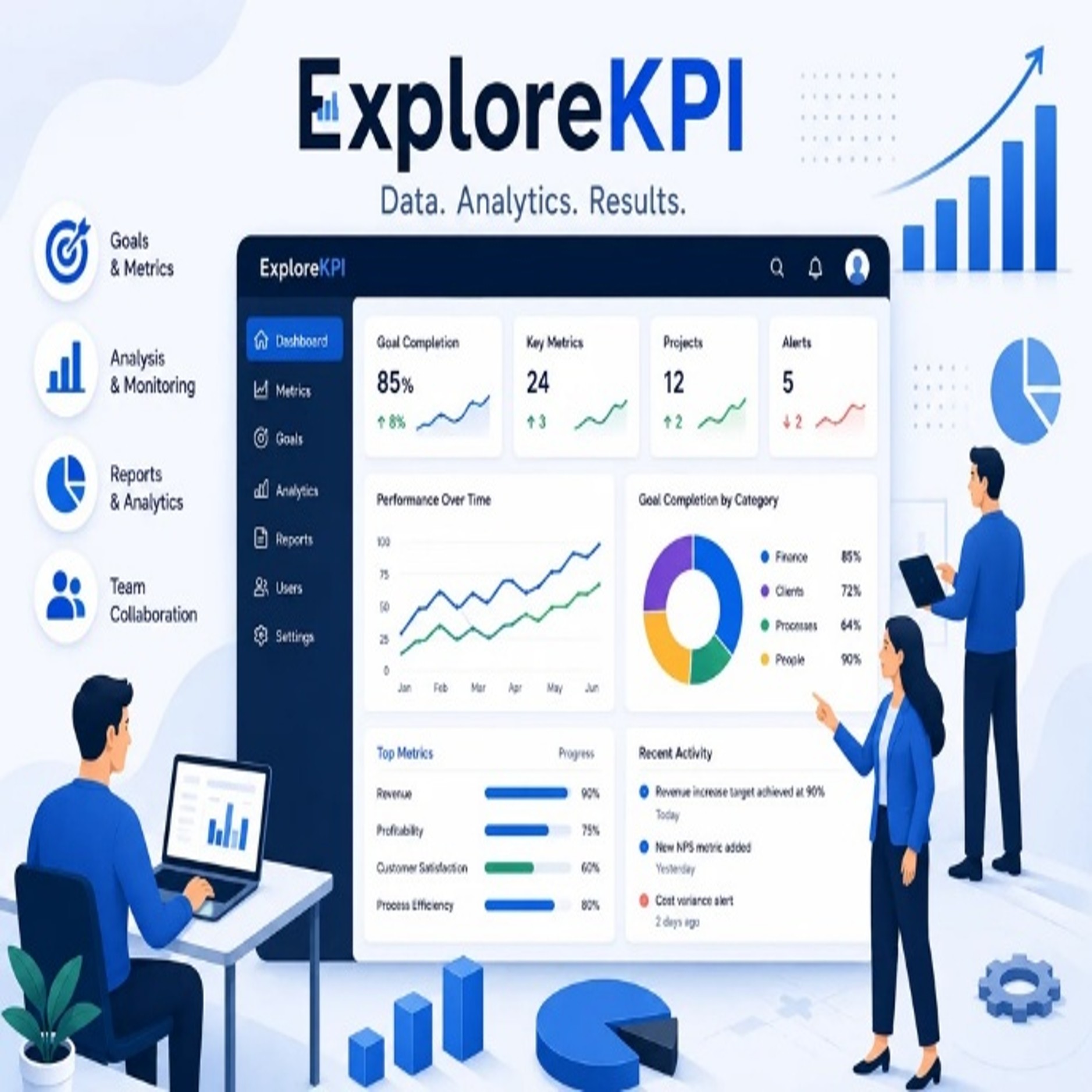
The Balanced Scorecard was initially developed by Kaplan and Norton in the early 1990s, introduced in 1992 in a Harvard Business Review article as a tool to help companies track non-financial Key Performance Indicators (KPIs). Alongside financial data, a framework for measuring businesses performance beyond historical financial KPIs. It provides an interconnected view of performance beyond the Financial Perspective, also Customer, Internal Processes, and Learning and Growth.
It enables businesses simply to translate their vision and strategy into actionable and measurable results.
The Dynamic, Digital, AI supported, Balanced Scorecard builds upon this foundation by leveraging digital tools and technologies to widen data collection, analysis, and reporting. The Balanced Scorecard is then a strategic management tool that, which businesses can incorporate their data in a real-time mode from various sources, e.g. enterprise resource planning (ERP) systems, customer relationship management (CRM) software, and other digital platforms. This integration allows for a more comprehensive and timelier understanding of performance, enabling organizations to respond quickly to changes in their internal and external environments.
The BSC ensures that all organizational efforts are aligned with
strategic goals, promoting talking the same language throughout the
organization.
Data in Real-time integration mode allows businesses
to monitor performance continuously, on short cycle, promoting quick
identification of issues and opportunities requiring improvement.
Access to accurate, leading strategic, and timely data
empowers leaders to make informed and calculated decisions based on future-oriented
measurements rather than relying on historical, lagging data.
By defining business specific strategic objectives and
their aligned performance measures, the Dynamic, Digital, AI supported BSC
promotes accountability, transparency, and participation at all levels of the
organization, encouraging individuals to take ownership of their contributions.
The robust nature of the Dynamic, Digital, AI
supported BSC encourages businesses to regularly review and adjust their
strategies and initiatives based on performance data, adopting a culture of
continuous improvement.
The visual representation of data through, e.g. charts, dashboards, Traffic
lights, etc. facilitates better communication of performance information among
stakeholders, increasing transparency and understanding.
AI
transformations are not only about deploying technologies. Such a shift,
requires a change into new configuration of culture, strategy, workflows, and
leadership mindset. The Balanced Scorecard offers a stable yet flexible
architecture to manage this complexity.
What is essential:
Ensure AI investments produce
tangible returns, while reducing operational inefficiencies.
Deploy AI
to increase personalization, responsiveness, and transparency.
Verify business
processes to take advantage of AI capabilities while ensuring compliance, governance
and oversight. If a process is left without a measurement, ask yourself, if
such a process is required.
Train employees at all levels with the skills and mindset change needed to adapt and achieve the results.
AI need to validated and controlled.
That is why, we created what I call, Control Gates, where the user can VALIDATED / CHALLENGE / CHANGE / ADD, the AI suggestions, in our tool, ExploreKPI.com . We installed these Control Gates to control the SWOT Analysis Gate, The selection of KPIs out of our comprehensive library Gate.